
EUNAVFOR MED Operation IRINI and the ITALIAN NAVY Sign Technical Arrangement to Strengthen the Protection and Resilience of Critical Maritime Infrastructure (CMI)
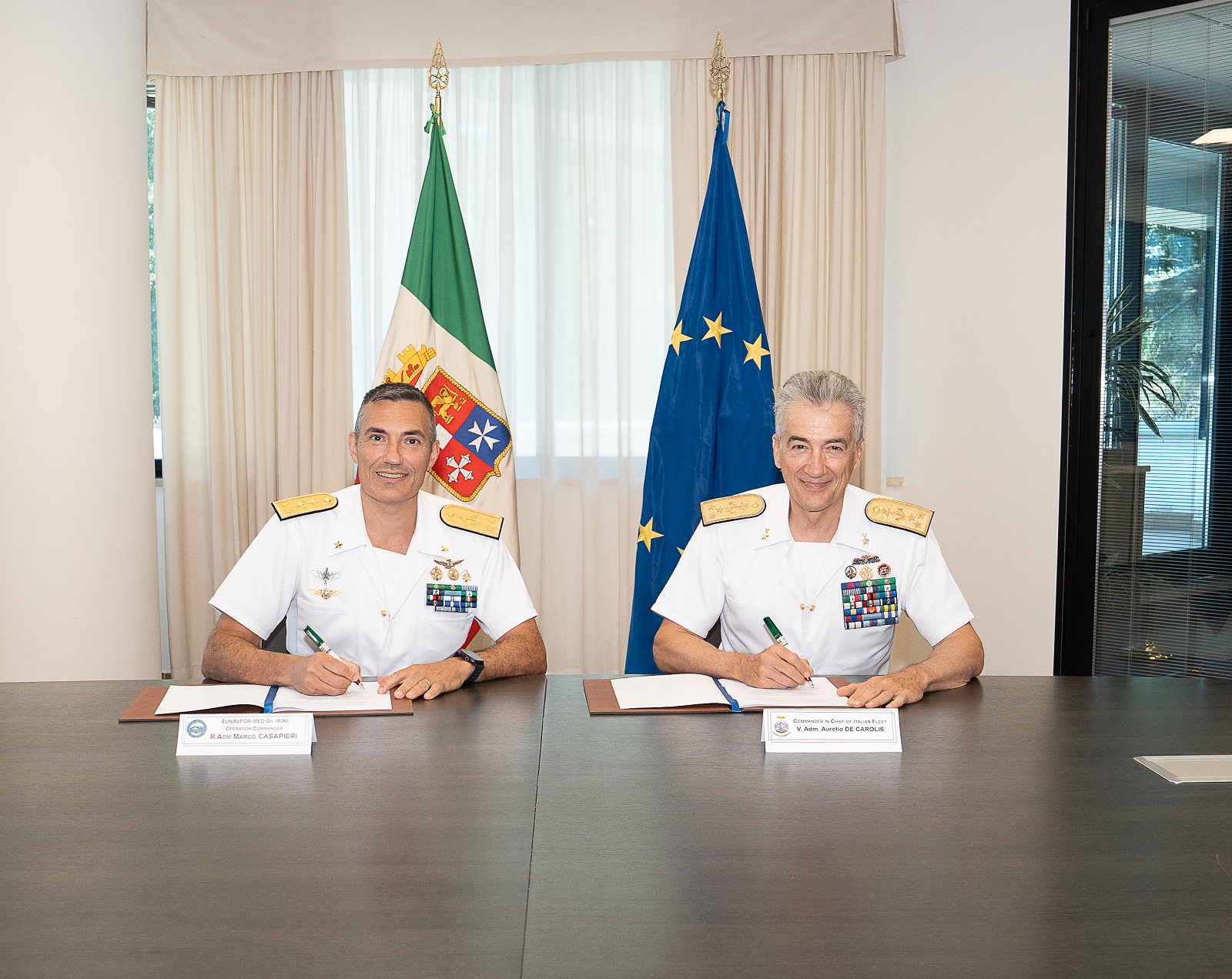
EUNAVFOR MED Operation IRINI and the ITALIAN NAVY have signed a Technical Arrangement aimed at strengthening cooperation, information exchange and coordinated monitoring activities to protect Critical Maritime Infrastructure in the Central Mediterranean. The signature, held in Rome on 4 August, marks a significant step in reinforcing the EU’s maritime security posture in a region where commercial routes, illicit activities and major undersea cables converge.
Vice Admiral Aurelio De Carolis, Commander in Chief of the Italian Naval Fleet, stressed that maritime security is essential for Italy and for the European Union, noting that illegal actions at sea could have serious consequences for the entire continent. He underlined that this agreement will enhance joint efforts to safeguard critical infrastructures and contribute to stability across the Mediterranean.
Rear Admiral (UH) Marco Casapieri, Operation Commander of IRINI, highlighted that the arrangement strengthens Europe’s collective capacity to protect the maritime infrastructure on which its security and prosperity depend. He emphasised that closer cooperation with the Italian Navy improves risk detection, information sharing and the resilience of a rules‑based maritime environment. Casapieri also welcomed the possibility for other European states to join similar arrangements and support IRINI’s mission in protecting CMI in the region.
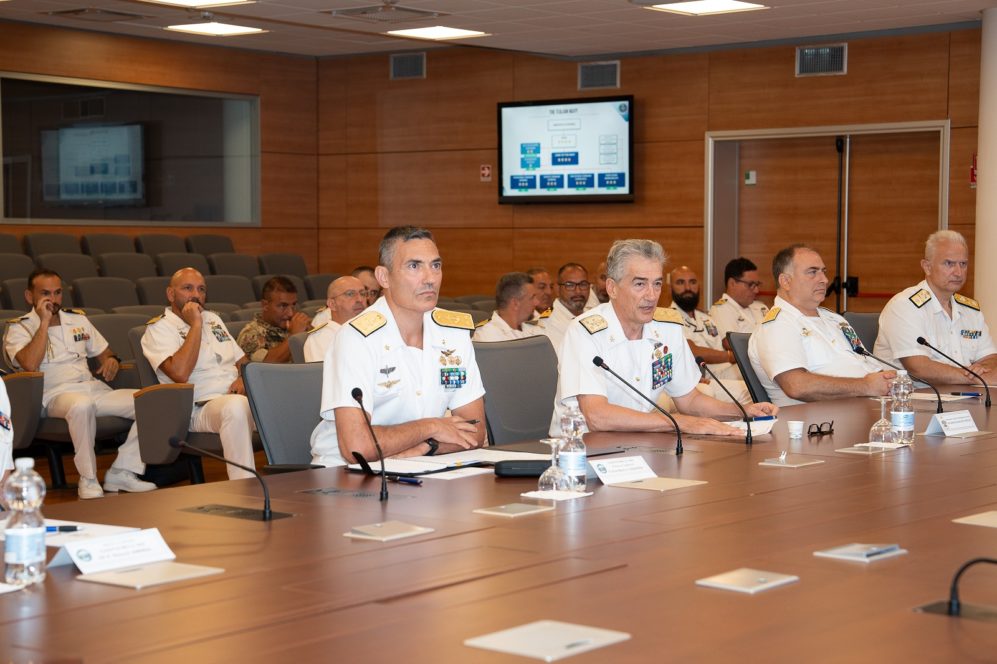
The agreement aligns with the EU Maritime Security Strategy and its Revised Action Plan (2023), reinforcing the EU’s integrated approach to maritime security. It supports IRINI’s role as a strategic maritime sensor, providing early warning, vessel tracking, information gathering and operational context in an area where most undersea cables to Europe intersect.
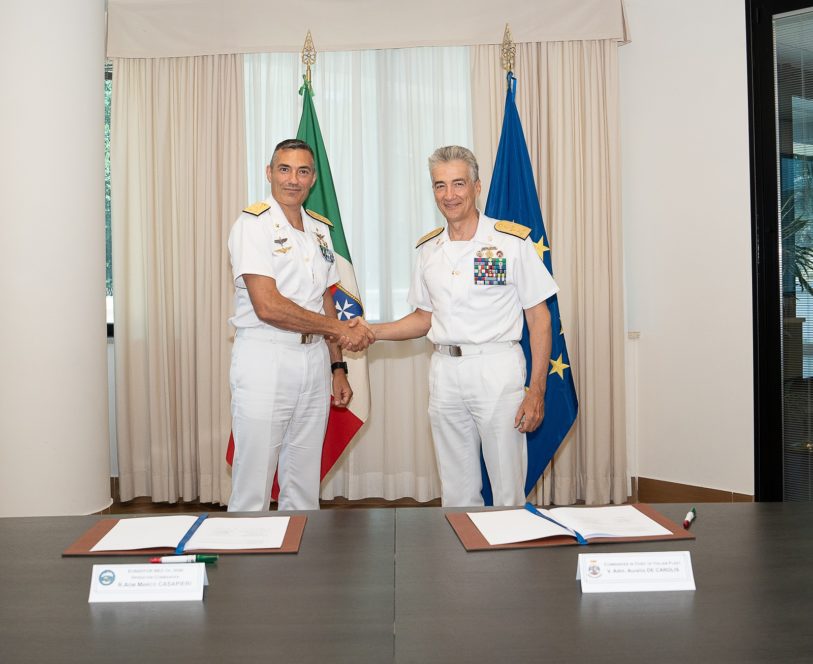
Through this arrangement, IRINI and the Italian Navy will deepen cooperation to improve monitoring of sensitive maritime zones, enhance the Recognised Maritime Picture and facilitate the identification of suspicious activities near critical infrastructure such as undersea cables and pipelines. It also establishes secure communication channels, shared geo‑mapping reference systems and coordinated reporting mechanisms.
The Technical Arrangement enters into force upon signature and remains valid for the duration of IRINI’s mandate, reaffirming the shared commitment of the EU and Italy to a secure, open and rules‑based maritime domain.